
LEGAL DISCLAIMER
This Hindsight Case Study (the “Report”) and the content, information, and opinions contained herein are provided for educational and informational purposes only. The information provided in the Report is not intended to be a complete source of information on any particular company, investment, asset, or market. The content of the Report is derived from user-submitted data and blockchain analysis believed to be reliable as of the date of publication. Hindsight reserves the right to amend or replace the information herein at any time. All information and materials in the Report are provided on an “as is” basis without warranty of any kind. This Report does not constitute financial or investment advice. You understand that you are using any and all information available in the Report at your own risk.
SUMMARY OF FINDINGS
A sophisticated brand impersonation operation targeting retail investors was intercepted following a user report submitted to Hindsight. The operation utilized a professional trading platform designed to trade off the name and reputation of a regulated UK forex broker to solicit deposits from victims targeted via social engineering.
- Targeted Impersonation: The scam operated under the domain pc.vantageforextrade.net, deliberately mimicking the name and style of the legitimate brokerage Vantage Markets to confuse investors.
- High-Level Sophistication: Unlike low-effort scams, this platform offered Identity Verification (KYC), bank wire options, and live support chat to simulate regulatory compliance and safety.
- Immediate Detection via Hindsight: Despite the convincing frontend, the user utilized Hindsight to analyze the deposit wallet (0x9b...d721B7). Within 5 seconds, the platform flagged the address with critical risk indicators including Fake Returns, Impersonation, and Rug Pull.
- Community Defense: The user leveraged Hindsight’s Report function to flag the entity, instantly contributing to the safety of the broader network.

THE HINDSIGHT ADVANTAGE
The user in this case was moments away from depositing capital. The social engineering was effective, and the platform looked flawless.
However, the user made one decision that changed the outcome: they checked the destination before sending the funds.
They copied the deposit address provided by the platform—0x9bA5cF549eab50858e95436845EB02E39ed721B7—and pasted it into Hindsight.
The 5-Second Verdict

In the time it took for the page to load, the illusion of the "regulated broker" collapsed. Hindsight did not see a corporate treasury or a segregated client account. It saw a wallet steeped in illicit activity.
The analysis was immediate and binary:
- Risk Level: Critical
- Tags Identified: Fake Returns, Impersonation, Romance Scam, Rug Pull.
The user did not need to be a blockchain forensic expert. They did not need to trace the funds through mixers or understand smart contract vulnerabilities. Hindsight translated complex on-chain data into a single, undeniable conclusion: Do Not Send.

UNMASKING THE NETWORK
While the impersonator's frontend was designed to lie, the blockchain is forced to tell the truth.
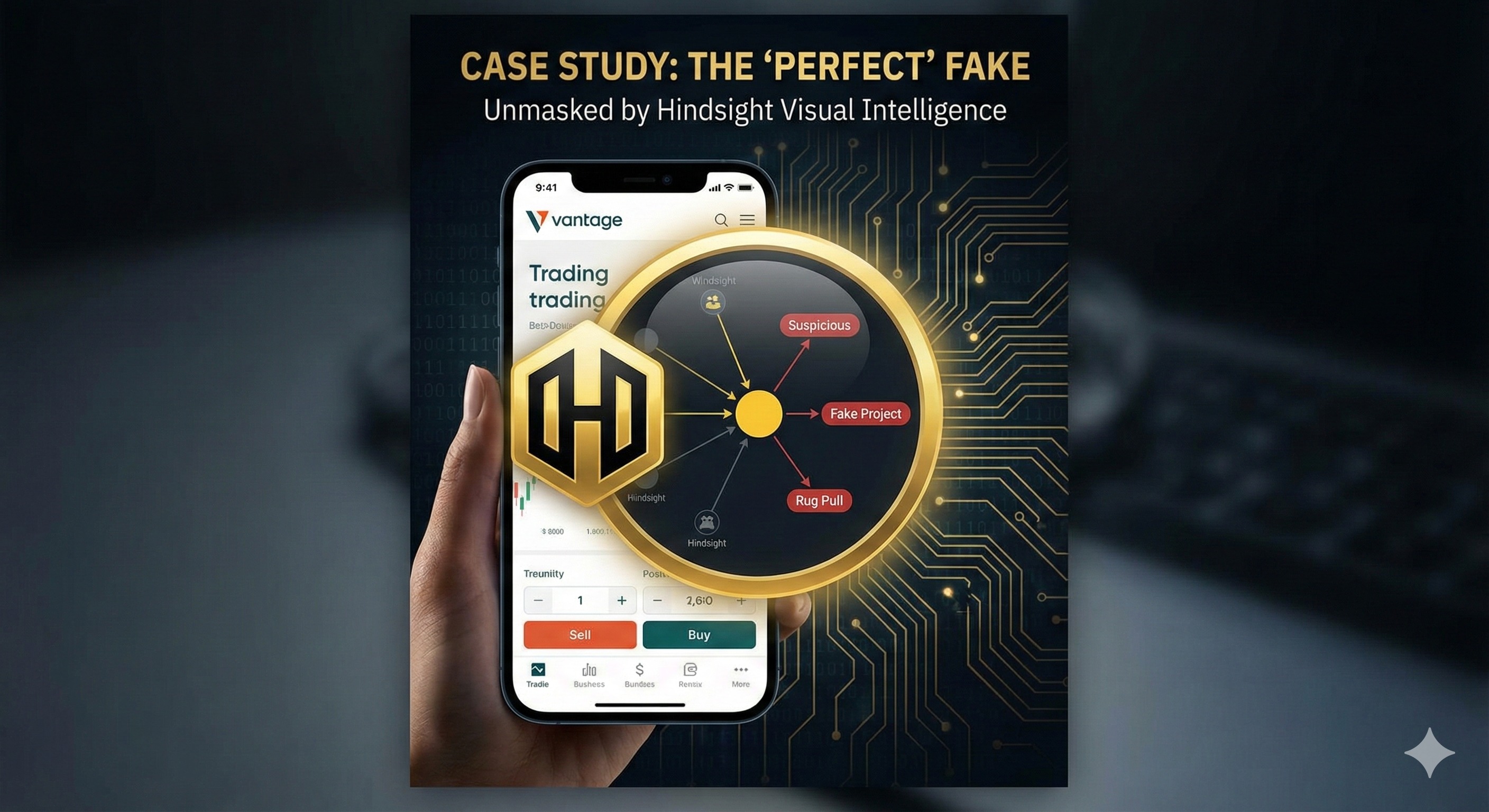
Hindsight’s visualization tools stripped away the web design and focused on the financial reality. The graph revealed that this specific wallet was not an isolated deposit address for a trader, but a node in a known scam network.
The discrepancy was absolute. A legitimate broker’s wallet behaves like a corporate bank account. The wallet identified by Hindsight behaved like a digital drop-box for stolen funds.
By providing this visualization instantly, Hindsight empowered the user to trust their own eyes over the scammer's promises.
THE POWER OF THE REPORT BUTTON
The most significant action in this case study occurred after the user saved their own funds. They hit Report.
Hindsight is not just a tool for individual protection; it is a collective defense system. When the user submitted their report, that intelligence was immediately integrated into our ecosystem.
- Real-Time Flagging: The domain and wallet are now marked for all other Hindsight users.
- Network Effect: A single report from one vigilant user effectively burns the scammer's infrastructure, warning thousands of others who might be targeted next.

CONCLUSION
The sophistication of pc.vantageforextrade.net proves that users can no longer rely on "looking out for typos" or "checking for SSL certificates." Scammers have unlimited resources to build perfect websites, fake support teams, and compliant-looking KYC portals that successfully hijack the reputation of major brands.
But they cannot fake the blockchain data.
Hindsight exists for this specific gap. It provides the only layer of verification that scammers cannot manipulate. In this case, it turned a potential five-figure loss into a non-event, all within a few seconds.

The website may change tomorrow. The wallet address may rotate next week. But as long as the community continues to verify and report through Hindsight, the truth remains visible.
Want to learn more?
This case study connects to a wider body of investor-protection research published by Hindsight. For readers looking to understand how scams are detected before funds are lost, explore our guide on avoiding rug pulls and high-risk wallets (https://hindsight.vip/blog/security-alert-bot-best-practices), learn how real-time crypto scam alerts surface impersonation and fraud as it happens (https://hindsight.vip/blog/real-time-crypto-scam-alerts-with-lighthouse-staying-safe-in-fast-moving-markets), and see how visual pattern recognition exposes hidden scam networks that fraudulent websites and fake brokers rely on (https://hindsight.vip/blog/how-visual-pattern-recognition-is-transforming-blockchain-fraud-detection). For investors who want hands-on verification tools, our walkthrough on setting up real-time crypto alerts shows how to monitor destinations before sending funds (https://hindsight.vip/blog/how-to-setup-crypto-alerts-system-trial-guide). To understand how all of these tools fit together into a single verification framework, visit the Hindsight Lighthouse, our central hub for blockchain education and visual trust infrastructure: https://hindsight.vip/lighthouse.
Frequently Asked Questions (FAQs)
How do fraudsters impersonate legitimate brokers?
Fraudsters commonly create fraudulent websites, imposter domains, or cloned broker scams that closely resemble a victim broker’s branding and official website. These bad actors may spoof broker email accounts, fabricate contact information, and reference real registration numbers from registered firms or a known broker-dealer to appear credible during an online search and to message investors directly.
Are these scams limited to unregistered or weak brokers?
No. Many cloned broker scammers deliberately impersonate well-known, registered brokers, investment advisers, and FCA- or SEC-associated brands. Even sophisticated investors can be deceived when a fraudulent platform presents itself as a regulated financial institution, despite having no legitimate operational backing.
What red flags should investors look for?
Common red flags include pressure to act quickly, instructions to bypass a firm’s official website, requests for off-platform payments, mismatched email addresses, altered domain names, or unexpected text messages used to message investors. Other warning signs include requests to move funds via wire transfer or crypto, or claims that accounts are held with a “temporary” or closed carrier arrangement.
How can state securities regulators or the SEC help?
State securities regulators and federal agencies investigate complaints related to investment scam activity, including SEC impersonators, fraudulent investment advisers, and unregistered broker-dealer operations. Filing a formal complaint helps regulators identify repeat bad actors, disrupt networks, and issue public warnings—but prevention depends on verification before funds are sent.
Why don’t traditional checks always protect investors?
Scammers can replicate a client relationship summary, copy public disclosures, and reference real CRD numbers pulled from legitimate firms. Some even mimic logistics language borrowed from unrelated industries, such as load boards or “settlement partners,” to add false credibility. These tactics make it difficult to distinguish between a legitimate investment professional and an imposter using publicly available data.
How does blockchain analysis change the equation?
Unlike websites, emails, or messaging platforms, blockchain transactions expose the real financial behavior behind the operation. Wallet analysis can reveal whether funds flow like a corporate treasury or like a scam network used by scammer shipper operations to aggregate and move victims’ investments across multiple addresses.
What should investors do if they suspect an imposter scheme?
Stop all payments immediately. Preserve evidence such as email addresses, phone numbers, transaction details, and any attempts to message investors. Report the activity to appropriate regulators and verification platforms. Early reporting can prevent additional losses and disrupt infrastructure before more victims’ investments are affected.